

Explore the robust landscape of your inner world to create the change you want to see in your life…
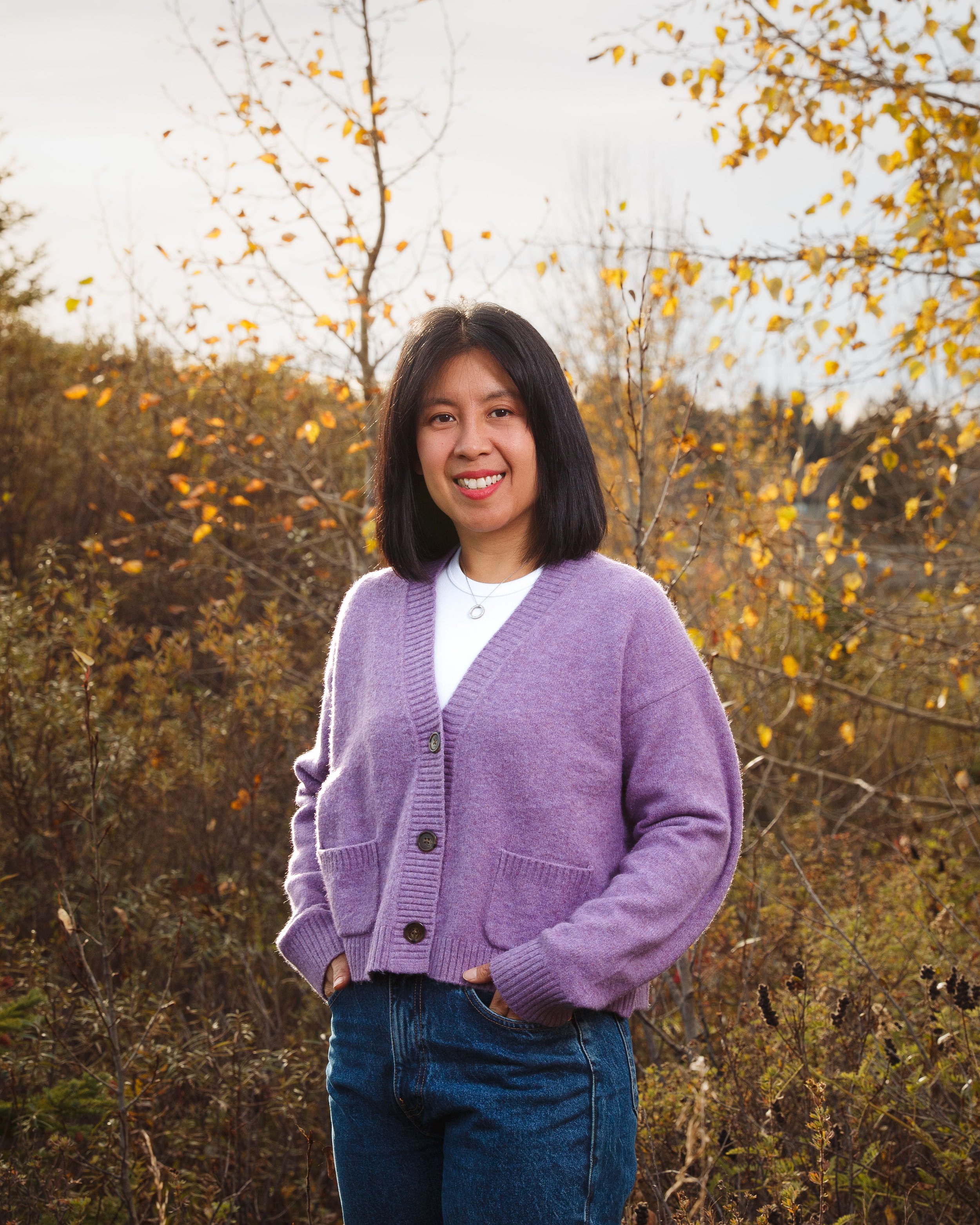
About Louise
MEd, Counselling Therapist / Clinical Counsellor
Association of Counselling Therapists Alberta (ACTA member)
Availability:
In-person (Bridgeland location)
Virtual (Phone & Video)
Highlights:
Level 1 & 2 Internal Family Systems
Level 1 Gottman Method (Couples)
Integrated Creative Approaches (Children)
Dialectical behavioural therapy
Acceptance and commitment therapy
Meet Louise
Hello, my name is Louise. Thank you for your interest in my work.
My journey into clinical counselling began in education.
After teaching English in South Korea for two years, I knew I belonged in the classroom molding young minds. In 2013, I completed my teacher training to be a high school English teacher. For the next seven years, my path as a classroom teacher took me from an international school in Seoul, South Korea to an elementary school in Igloolik, Nunavut.
In 2017, I took on a specialty role as a Learning Support Teacher in the Surrey School District. Through these diverse experiences, I quickly learned that in order for students to learn, they needed to feel happy and safe in my care. Unmet emotional and physical needs create barriers to learning. I began to realize that it is more important to focus on how children felt about themselves and the world around them - much more so than delivering curriculum.
My curiosity about social-emotional wellbeing and reflecting on my own mental health eventually led me to pursue a master’s degree and train as a clinical counsellor. I completed my clinical counselling practicum and worked as a school counsellor in the Surrey School District for three years before making the decision to transition into private practice.
In my time working in school settings, I did not have the opportunity to develop my therapeutic skills. As a school counsellor, I was primarily responding to critical incidents and crises on a day-to-day basis. In order to practice therapy and grow, I needed to be on the other side of our system of mental health support. Before relocating to Calgary, I joined an amazing team of counsellors at Strive Counselling in Burnaby, British Columbia. Through collaboration with my colleagues, ongoing professional development, and supervision with wonderful mentors, I am able to hone my craft and support my clients with confidence.
The most significant learning I gained as an educator was that no individual exists in a vacuum. We are all part of a village - a system of people in our lives who shape who we are and how we experience the world around us. I had the privilege to work with children and adolescents as well as their parents. This set the foundation for my work with children, individuals, couples, and families.
In my daily life, I work hard to practice what I preach about work-life balance! Outside of prioritizing quality time with family, I am enthusiastic about improving my fitness and learning more about resistance training for women. I am also currently learning French recreationally and working on carving out more time for baking and painting. As a self-proclaimed foodie, when an opportunity arises, I love to travel for food and cook food from my culture!
Learn more
-
EMDR stands for Eye Movement Desensitization and Reprocessing. This form of therapy has been successfully used to treat and improve symptoms of PTSD. Early research indicates positive outcomes especially for war veterans and sexual assault survivors. Read more about it here.
-
IFS stands for Internal Family Systems. This mode of therapy is also known as “parts work”. The name can sound like a bit of a misnomer because it is not a kind of family therapy (even though it can be used to support families). IFS training is one of the most sought after and difficult to access by clinicians all around the world. Read more about IFS here.
-
John and Julie Gottman developed their method for helping couples through years of extensive research in their “Love Lab”. They dedicate their work by studying couples who fell into one of two categories - the masters and disasters. The Gottmans have created a useful framework for understanding how and what to strive for in our relationships. Read more here.
-
If you’re just getting started or looking to get back in, traditional talk therapy can be a gentle stepping stone into deeper experiential therapies like EMDR and IFS. Talk therapy allows clients to develop skills to acknowledge and identify emotions. The therapist can use a solutions-focused approach to provide clients with tools and distress-tolerance skills to practice in daily life. Learn more here.